
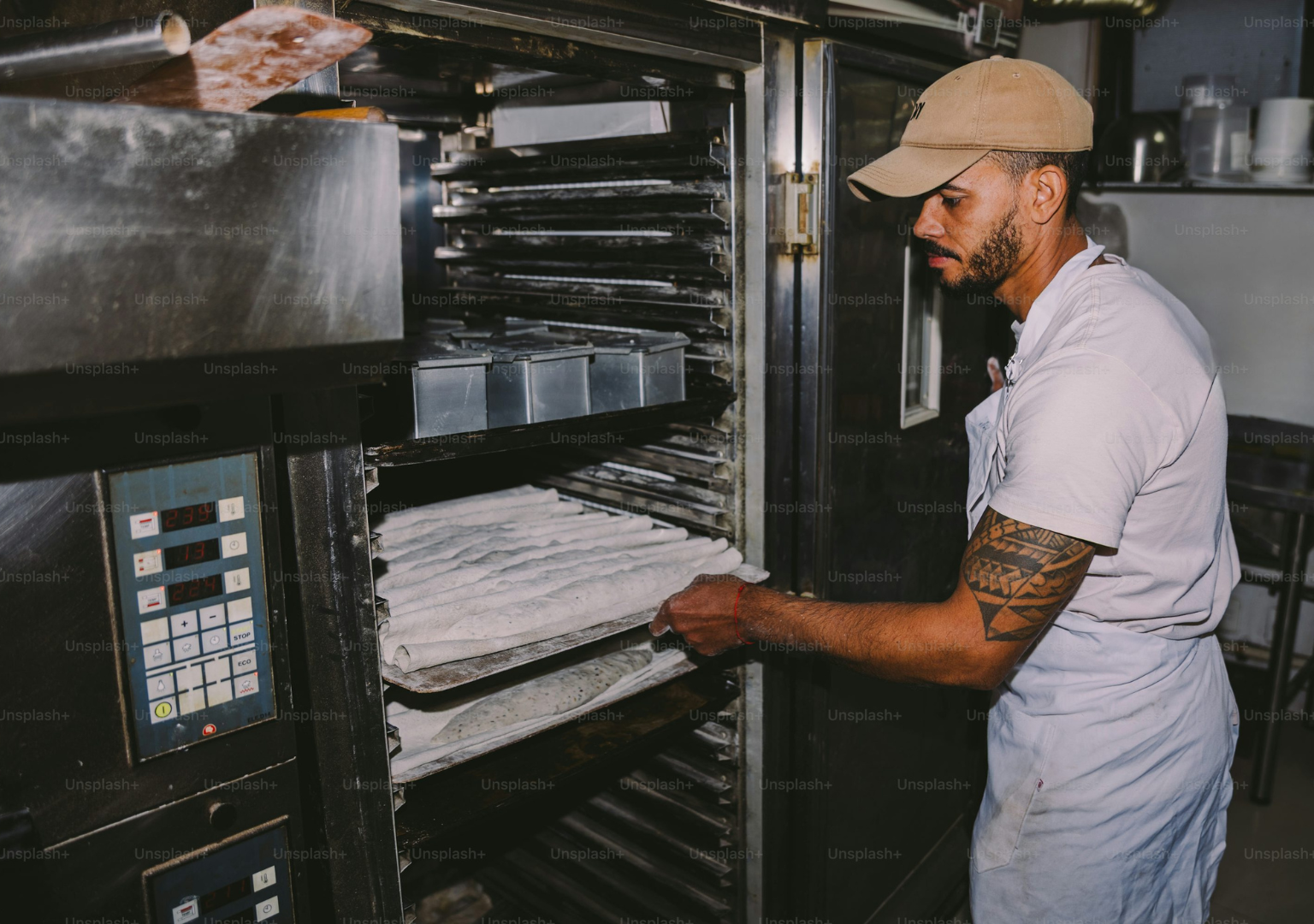
As you advance in your baking career, you’ll eventually work with industrial ovens. These powerful machines are very different from home ovens. They produce consistent heat, larger batch capacity, and professional results — but they also require knowledge and strict safety awareness.
Understanding how to operate industrial ovens properly protects you, your team, and your products. Safety and precision go hand in hand in professional kitchens.
Let’s explore how to work confidently and responsibly with commercial baking equipment.
Types of Industrial Ovens
Professional bakeries typically use one or more of the following:
Deck Ovens
- Stone or steel baking surface
- Ideal for artisan bread
- Excellent heat retention
- Often include steam injection
Convection Ovens
- Circulating hot air system
- Even baking for pastries and rolls
- Faster cooking times
Rack Ovens
- Large rotating racks
- Used in high-volume production
- Common in commercial bakeries
Each oven type behaves differently.
Understanding how heat circulates inside the oven improves baking results and safety.
Preheating and Temperature Control
Industrial ovens require proper preheating.
Always:
- Preheat fully before loading dough
- Confirm temperature with built-in gauges
- Use oven thermometers if needed
In artisan baking, insufficient preheating can ruin oven spring.
In high-production environments, temperature inconsistency can lead to uneven batches.
Temperature discipline ensures quality and reduces waste.
Understanding Steam Injection
Many deck ovens include steam injection.
Steam:
- Keeps crust flexible during initial baking
- Promotes strong oven spring
- Enhances crust shine
However, steam systems operate under pressure.
Safety precautions:
- Never stand directly in front when opening after steam release
- Wear heat-resistant gloves
- Keep face away from steam bursts
Steam burns can be severe.
Respect the equipment.
Safe Loading and Unloading Practices
Industrial ovens operate at very high temperatures — often between 220°C and 260°C (430°F–500°F).
Always:
- Wear heat-resistant gloves
- Use proper tools for loading
- Keep arms protected
- Move deliberately, not hurriedly
Avoid sudden movements.
Hot trays and surfaces can cause serious injury.
Controlled motion prevents accidents.
Proper Use of Baking Tools
Professional tools support safety.
Common tools include:
- Long-handled peels
- Oven loaders
- Metal hooks
- Heavy-duty mitts
Never use damaged equipment.
Worn gloves or unstable trays increase risk.
Regular equipment inspection is part of professional discipline.
Positioning and Body Awareness
Working with industrial ovens requires awareness of your body positioning.
Keep in mind:
- Maintain stable footing
- Avoid leaning too far inside
- Stand slightly to the side when opening doors
- Keep clear communication with coworkers nearby
In busy kitchens, coordination prevents collisions and burns.
Team awareness improves safety.
Managing High-Volume Production
In commercial settings, multiple batches may bake simultaneously.
You must monitor:
- Baking time
- Tray rotation
- Color development
- Steam timing
Using timers consistently prevents overbaking.
Rushing increases risk of mistakes and accidents.
Stay organized and focused.
Cleaning and Maintenance Safety
Ovens require regular cleaning.
When cleaning:
- Ensure oven is turned off and cooled
- Use approved cleaning products
- Avoid direct contact with hot surfaces
- Follow manufacturer instructions
Improper cleaning can damage equipment and create hazards.
Maintenance is part of professional responsibility.
Emergency Preparedness
Know emergency procedures in your bakery.
Understand:
- Where fire extinguishers are located
- How to shut off gas supply
- Electrical safety protocols
- First aid procedures
Preparation reduces panic during unexpected events.
Professional kitchens prioritize safety training.
Common Safety Mistakes to Avoid
Avoid these risky behaviors:
- Ignoring protective gloves
- Opening oven doors too quickly
- Standing directly in front during steam release
- Rushing tray removal
- Wearing loose clothing
Professional discipline reduces risk.
Carelessness causes injuries.
Heat Management and Physical Awareness
Working around industrial ovens exposes you to intense heat.
To stay safe:
- Stay hydrated
- Take short breaks when needed
- Wear breathable, protective clothing
- Maintain good posture
Fatigue increases the likelihood of mistakes.
Physical awareness protects long-term health.
Understanding Gas vs. Electric Ovens
Industrial ovens may be gas-powered or electric.
Gas ovens require awareness of:
- Proper ignition
- Gas smell detection
- Ventilation systems
Electric ovens require:
- Awareness of electrical safety
- Avoiding water contact with controls
- Proper shutdown procedures
Know your equipment thoroughly.
Never guess how it operates.
Building Confidence Through Practice
Working with industrial ovens can feel intimidating at first.
Confidence builds through:
- Careful observation
- Gradual responsibility increase
- Learning from experienced bakers
- Asking questions
Respect the machine — but don’t fear it.
Understanding reduces anxiety.
Professionalism and Responsibility
Safe oven operation reflects professionalism.
Employers value bakers who:
- Follow safety protocols
- Protect coworkers
- Maintain equipment
- Work calmly under pressure
Safety awareness builds trust.
Trust builds opportunity.
Long-Term Career Benefits
Learning to operate industrial ovens safely:
- Expands employability
- Builds technical credibility
- Improves production efficiency
- Demonstrates leadership readiness
Technical confidence increases your value in professional kitchens.
Final Thoughts: Precision and Safety Go Together
Industrial ovens are powerful tools.
Used correctly, they:
- Create beautiful crust
- Enhance oven spring
- Produce consistent results
Used carelessly, they pose serious risks.
Professional baking is not only about flavor and appearance.
It’s about responsibility.
Respect heat.
Follow protocol.
Move deliberately.
Protect yourself and your team.
When safety becomes a habit, skill grows without unnecessary risk.
Master the oven with discipline — and it becomes one of your strongest professional allies.