
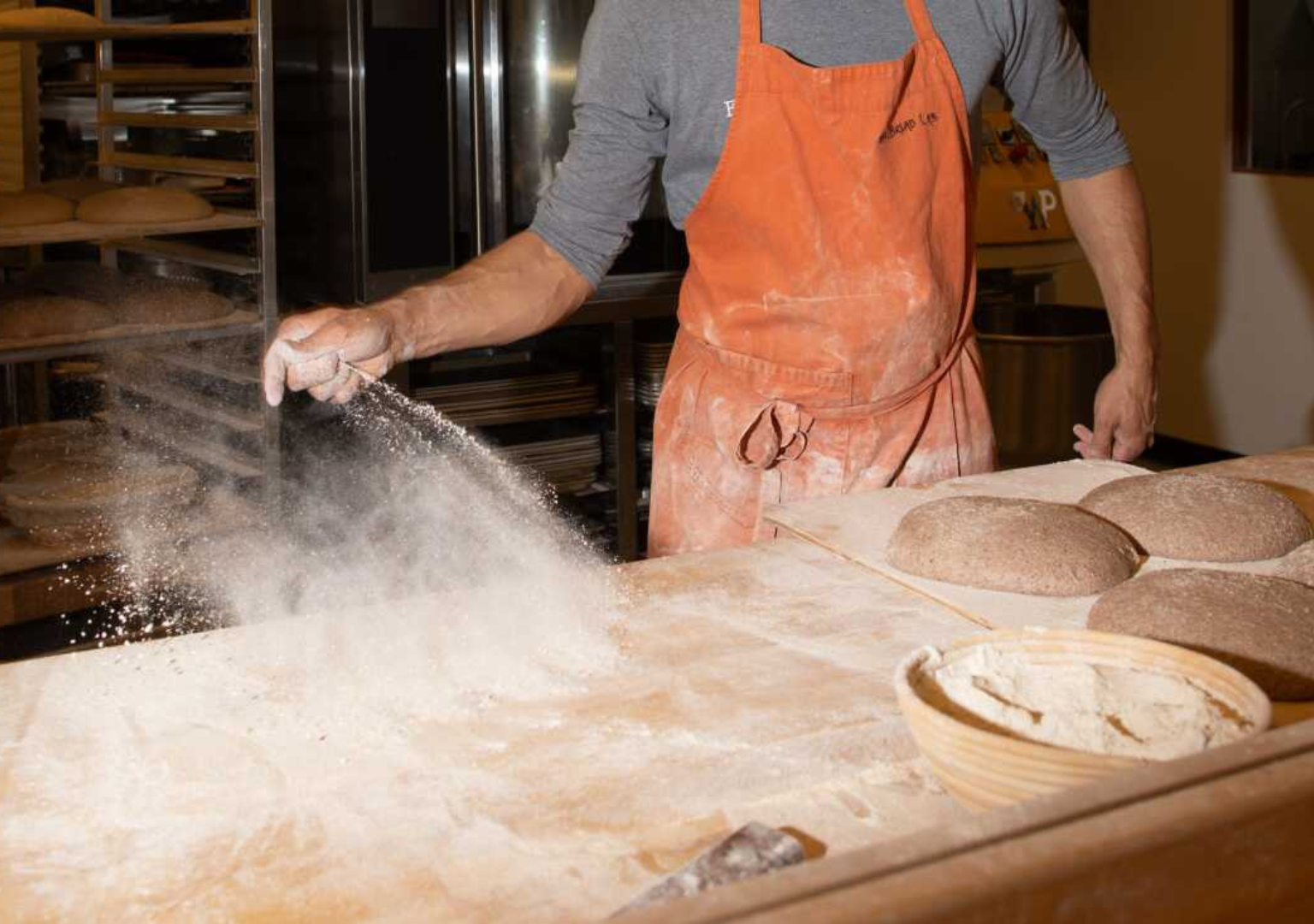
Whole grain bread is increasingly popular among customers who value nutrition, flavor depth, and natural ingredients. However, working with whole grain flour presents unique challenges compared to white flour.
If you want to master whole grain baking and produce high-quality loaves, you need to understand how fiber, bran, and germ affect dough structure and fermentation.
Let’s explore practical strategies to improve your whole grain bread and elevate its texture, flavor, and structure.
Why Whole Grain Dough Behaves Differently
Whole grain flour contains all parts of the wheat kernel:
- Bran
- Germ
- Endosperm
Unlike refined flour, bran particles:
- Cut through gluten strands
- Absorb more water
- Increase dough density
This makes whole grain dough:
- Heavier
- Less elastic
- More prone to tight crumb
Understanding these characteristics allows you to adjust technique properly.
1. Increase Hydration Carefully
Whole grain flour absorbs more water than white flour.
If you use the same hydration level as white bread, the dough may feel dry and stiff.
To improve texture:
- Increase hydration gradually
- Add 5–10% more water compared to white flour recipes
Higher hydration helps soften bran particles and improve crumb.
However, adjust slowly to maintain handling control.
2. Allow Longer Autolyse
Autolyse is a resting period after mixing flour and water (before adding salt and yeast).
For whole grain dough, autolyse is especially beneficial because:
- Bran absorbs water
- Gluten begins developing naturally
- Dough becomes more extensible
Allowing 30–60 minutes of autolyse improves structure and handling.
Patience strengthens the final result.
3. Extend Fermentation Time
Whole grain bread benefits from longer fermentation.
Extended fermentation:
- Softens bran
- Improves flavor complexity
- Enhances digestibility
- Improves crumb elasticity
You can achieve this by:
- Reducing yeast quantity
- Using cold fermentation
- Incorporating sourdough starter
Time is one of your most powerful tools.
4. Blend Whole Grain with White Flour
If 100% whole wheat feels too dense, consider blending.
For example:
- 70% whole wheat + 30% white flour
- 80% whole wheat + 20% white flour
Blending:
- Strengthens gluten
- Improves rise
- Creates lighter crumb
This approach balances nutrition and structure.
5. Strengthen Gluten Gently
Whole grain dough requires careful gluten development.
Use:
- Stretch-and-fold technique
- Gentle kneading
- Rest periods between folds
Avoid aggressive kneading.
Too much force can tear gluten strands weakened by bran.
Controlled strengthening works better.
6. Monitor Dough Temperature
Fermentation in whole grain dough can accelerate because of increased nutrients in the flour.
Monitor:
- Final dough temperature
- Room temperature
- Fermentation speed
If fermentation moves too quickly, structure may weaken.
Temperature awareness improves predictability.
7. Improve Flavor Depth
Whole grain bread naturally has:
- Nutty aroma
- Earthy notes
- Slight bitterness
You can enhance flavor by:
- Toasting seeds before adding
- Incorporating honey or molasses
- Using sourdough fermentation
- Adding soaked grains
Flavor balance makes whole grain bread more appealing.
8. Shape with Proper Surface Tension
Whole grain dough spreads more easily.
Proper shaping:
- Builds tight outer structure
- Supports oven spring
- Improves crumb stability
Avoid loose shaping.
Strong surface tension helps compensate for weaker gluten.
9. Bake Thoroughly
Whole grain bread often requires slightly longer baking.
Underbaking may cause:
- Gummy crumb
- Dense center
- Incomplete internal cooking
Check:
- Internal temperature (around 95–98°C / 203–208°F)
- Even crust color
- Hollow sound when tapped
Proper baking improves texture and shelf life.
10. Let It Cool Completely
Whole grain bread needs full cooling before slicing.
Cutting too early can:
- Compress crumb
- Create gummy texture
- Disrupt structure
Allow complete cooling to preserve texture.
Common Mistakes in Whole Grain Baking
Avoid:
- Using low hydration
- Rushing fermentation
- Skipping autolyse
- Overmixing
- Expecting white bread texture
Whole grain bread has its own character.
Accept its natural density and depth.
Building Confidence With Whole Grain Dough
If you’re new to whole grain baking:
- Start with partial blends
- Practice shaping frequently
- Observe fermentation carefully
- Document adjustments
Each bake improves your understanding.
Benefits of Mastering Whole Grain Bread
Learning whole grain techniques:
- Expands your product range
- Increases market appeal
- Strengthens fermentation knowledge
- Improves hydration control
Customers increasingly value health-conscious options.
Versatility strengthens your professional profile.
Signs Your Whole Grain Bread Is Improving
You’ll notice progress when:
- Crumb becomes lighter and more elastic
- Flavor deepens naturally
- Rise improves
- Texture feels moist but structured
Small improvements accumulate over time.
Final Thoughts: Respect the Grain
Whole grain bread demands more attention — but rewards you with depth and character.
Increase hydration.
Extend fermentation.
Build surface tension.
Bake thoroughly.
Cool patiently.
Mastering whole grain baking strengthens your overall skill as a baker.
It teaches you to manage weaker gluten, higher hydration, and deeper fermentation complexity.
And when you achieve a balanced, flavorful whole grain loaf, you’ll know your technique has matured.
Respect the grain — and it will reward your discipline.
Keep practicing.
Keep refining.
Keep building skill.
Whole grain mastery is a powerful step in your baking journey.