
Behind every consistent loaf of bread is not just skill — but the right tools. Professional baking is built on precision, efficiency, and reliability. Having the correct equipment makes your workflow smoother and your results more consistent.
Whether you are baking at home or preparing for a professional environment, understanding the essential tools for daily production will elevate your performance.
Let’s explore the tools every aspiring baker should know and master.
1. Digital Kitchen Scale
A digital scale is non-negotiable.
Professional baking requires weight measurement, not volume.
Why it matters:
- Ensures hydration accuracy
- Prevents ingredient imbalance
- Improves repeatability
- Supports baker’s percentage calculations
Even small measurement differences affect fermentation and texture.
Precision begins with the scale.
2. Mixing Bowls (Various Sizes)
Durable mixing bowls allow you to:
- Mix different dough types
- Rest dough during fermentation
- Organize ingredients before mixing
Stainless steel bowls are popular because they are:
- Easy to clean
- Durable
- Resistant to odor absorption
Organization improves workflow efficiency.
3. Bench Scraper
A bench scraper is one of the most versatile tools.
It helps you:
- Divide dough evenly
- Clean your work surface
- Lift sticky dough
- Maintain shaping precision
It improves both hygiene and efficiency.
Professional bakers use it constantly throughout the day.
4. Dough Scraper (Flexible)
Unlike the bench scraper, a flexible dough scraper is ideal for:
- Cleaning mixing bowls
- Handling softer dough
- Gently folding ingredients
It prevents waste and keeps workstations clean.
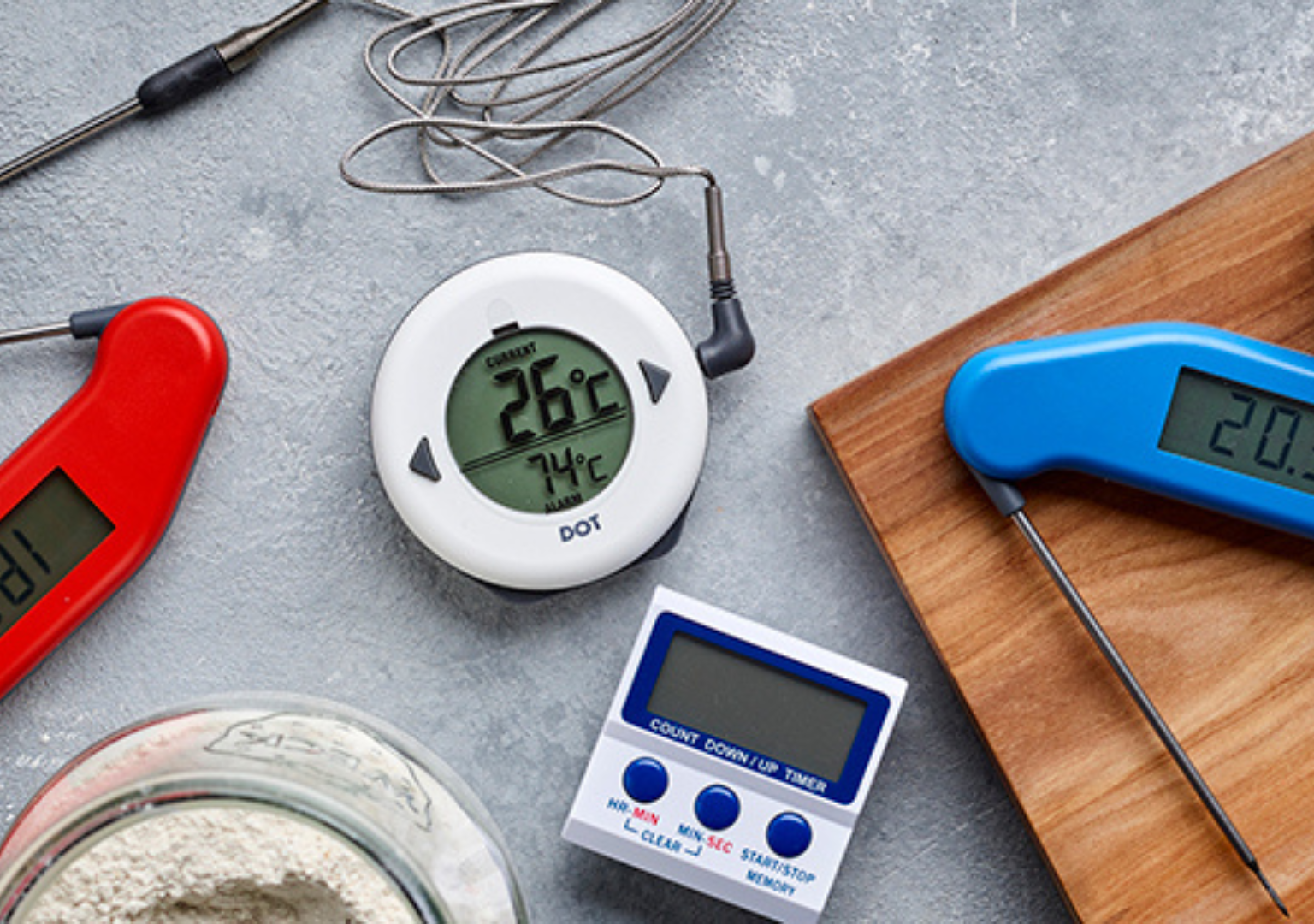
5. Thermometer
Temperature control is critical.
Use a thermometer to measure:
- Water temperature
- Room temperature
- Final dough temperature
- Oven accuracy
Fermentation speed depends heavily on temperature.
Without measurement, you are guessing.
Professional bakers avoid guesswork.
6. Proofing Baskets (Bannetons)
Proofing baskets support dough structure during final proof.
They:
- Maintain shape
- Improve oven spring
- Create attractive flour patterns
Especially important for artisan loaves like boules and bâtards.
They encourage upward rise instead of spreading.
7. Lame or Scoring Blade
Scoring controls how bread expands in the oven.
A sharp blade allows:
- Clean cuts
- Controlled expansion
- Professional appearance
Dull knives tear the dough surface.
Confident scoring improves oven spring and presentation.
8. Baking Stone or Steel
For home bakers, a baking stone or steel mimics deck oven conditions.
It:
- Retains heat effectively
- Improves oven spring
- Enhances crust development
Preheat thoroughly before baking.
Stable heat equals stable results.
9. Heavy-Duty Oven Mitts
Safety is part of professionalism.
Industrial and home ovens reach high temperatures.
Heat-resistant gloves:
- Prevent burns
- Allow confident handling
- Improve safety during steam release
Never underestimate the importance of protective gear.
10. Timer
Fermentation timing must be monitored carefully.
A simple timer helps track:
- Bulk fermentation
- Stretch-and-fold intervals
- Final proof
- Baking duration
Consistent timing builds production discipline.
11. Measuring Containers for Liquids
Although weight is preferred, clear containers help:
- Measure water quickly
- Track hydration
- Monitor temperature adjustments
Organization prevents mistakes.
12. Cooling Rack
Bread continues developing after leaving the oven.
Cooling racks allow:
- Air circulation
- Even moisture release
- Proper crust development
Cutting bread too early can damage crumb structure.
Cooling is part of the process.
13. Stand Mixer (Optional but Helpful)
While not mandatory, a stand mixer:
- Reduces physical strain
- Handles enriched dough efficiently
- Saves time during large batches
However, understanding hand mixing first builds stronger technical awareness.
Skill matters more than machinery.
14. Storage Containers
Ingredient storage affects consistency.
Use airtight containers for:
- Flour
- Yeast
- Seeds
- Whole grains
Proper storage preserves freshness and prevents contamination.
Professional kitchens maintain organized storage systems.
15. Notebook or Digital Log
One of the most overlooked tools is documentation.
Keep records of:
- Hydration percentages
- Fermentation times
- Temperature conditions
- Recipe adjustments
- Observations
Documentation transforms experience into measurable improvement.
Professional growth depends on tracking.
Organizing Your Daily Workspace
Tools alone are not enough.
Workspace organization improves efficiency.
Before starting:
- Prepare all ingredients
- Preheat oven
- Arrange tools within reach
- Clear unnecessary clutter
Clean workflow supports consistent production.
Investing Gradually
You do not need everything at once.
Start with:
- Scale
- Bench scraper
- Thermometer
- Mixing bowls
Add specialized tools as your skill advances.
Strategic investment prevents unnecessary expense.
Tools vs. Technique
Remember:
Tools support skill — they don’t replace it.
A professional baker with basic tools can outperform a beginner with expensive equipment.
Master technique first.
Then enhance it with proper tools.
Final Thoughts: Build a Professional Routine
Essential tools create:
- Precision
- Efficiency
- Safety
- Organization
- Consistency
Daily habits matter as much as equipment.
Prepare your station.
Measure carefully.
Monitor temperature.
Maintain cleanliness.
Over time, your tools become extensions of your hands.
And when your workflow feels smooth and controlled, you’ll notice your confidence growing alongside your skill.
Baking excellence begins with preparation.
Equip yourself wisely — and practice consistently.