
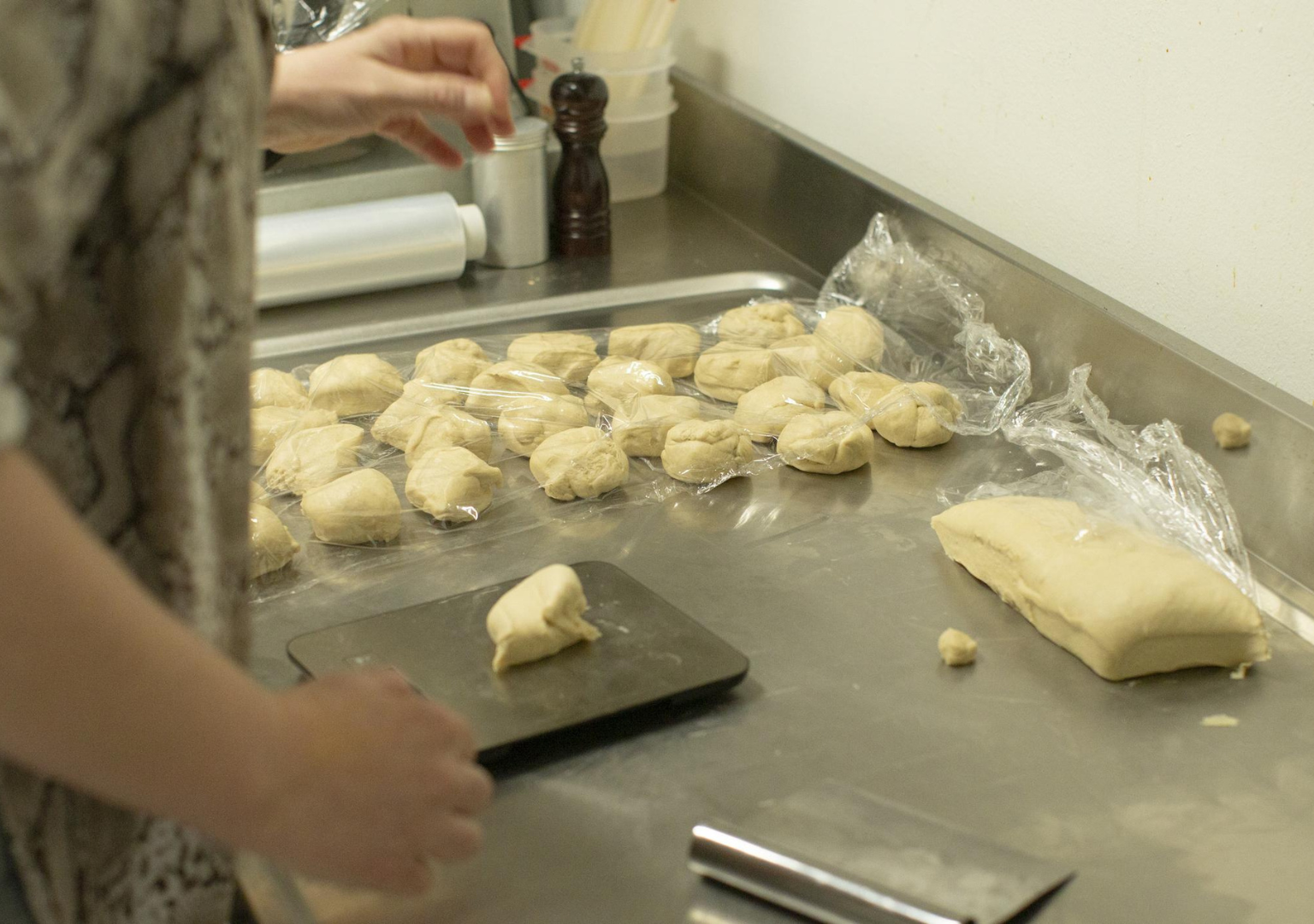
Consistency is one of the most important qualities of a professional baker. Anyone can bake one good loaf. A true professional can bake fifty loaves that all look, taste, and feel the same.
If you want to grow in your baking career, mastering consistency will elevate your reputation and open more opportunities — whether you work in a bakery or plan to start your own business.
Let’s explore how to build production consistency step by step.
Why Consistency Matters So Much
Customers return because they trust what they receive.
Inconsistent bread leads to:
- Lost confidence
- Wasted ingredients
- Reduced efficiency
- Damaged reputation
Professional baking is built on repeatable results.
Consistency transforms skill into reliability.
1. Measure Everything by Weight
Volume measurements create variation.
To improve consistency:
- Use a digital scale
- Measure flour, water, salt, and yeast precisely
- Record hydration percentages
Even small differences in flour weight can affect:
- Dough texture
- Fermentation speed
- Final crumb structure
Precision is the foundation of consistency.
2. Control Dough Temperature
Dough temperature directly impacts fermentation.
Ideal final dough temperature usually ranges between:
24–26°C (75–79°F)
If dough is too warm:
- Fermentation accelerates
- Flavor becomes inconsistent
If too cold:
- Fermentation slows
- Timing becomes unpredictable
Use a thermometer to monitor:
- Water temperature
- Room temperature
- Final dough temperature
Temperature awareness stabilizes results.
3. Standardize Fermentation Timing
Instead of guessing, build structure.
Track:
- Bulk fermentation duration
- Number of stretch-and-fold cycles
- Final proof time
- Refrigeration periods
Record how long dough takes to double in size under specific conditions.
Standardization reduces uncertainty.
4. Keep a Production Log
Professional bakeries document everything.
Your log should include:
- Date
- Flour type
- Hydration percentage
- Fermentation time
- Room temperature
- Observations
Patterns become clear over time.
Documentation turns experience into measurable improvement.
5. Develop Uniform Shaping Technique
Inconsistent shaping leads to inconsistent oven spring.
Practice:
- Dividing dough evenly by weight
- Pre-shaping carefully
- Building consistent surface tension
- Sealing seams properly
Uniform shaping ensures:
- Even crumb
- Balanced structure
- Predictable rise
Repetition builds muscle memory.
6. Preheat and Manage Oven Properly
Oven inconsistency ruins production.
Always:
- Fully preheat for at least 30 minutes
- Use a baking stone or deck surface when possible
- Monitor temperature fluctuations
- Rotate trays if necessary
If baking multiple batches, ensure temperature remains stable between loads.
Consistency in heat equals consistency in crust.
7. Control Hydration Carefully
Changing hydration slightly alters dough behavior.
High hydration:
- Creates open crumb
- Requires advanced handling
Lower hydration:
- Produces tighter crumb
- Is easier to control
Avoid random adjustments.
If modifying hydration, do so in small, measured increments.
8. Standardize Ingredient Quality
Switching flour brands or yeast types can affect performance.
To maintain consistency:
- Use the same supplier when possible
- Check expiration dates
- Store ingredients properly
Ingredient stability supports product stability.
9. Train Your Eye for Fermentation Cues
Time alone isn’t enough.
Learn to recognize visual signs:
- Slight dome shape during bulk
- Air bubbles along surface
- Elastic but relaxed texture
- Proper response to the poke test
Visual awareness supports timing discipline.
10. Avoid Rushing Production
Inconsistent speed creates inconsistent results.
Rushing may cause:
- Underproofing
- Incomplete shaping
- Incorrect baking time
Build a realistic schedule.
Time discipline reduces pressure.
11. Maintain Clean and Organized Workflow
Disorganization leads to mistakes.
Maintain:
- Clear work surfaces
- Pre-measured ingredients
- Organized tools
- Clean environment
Professional workflow improves efficiency and reduces error.
12. Bake in Controlled Batches
If producing large quantities, divide production into manageable batches.
This allows:
- Better fermentation control
- Easier shaping management
- Consistent baking time
Overloading the schedule reduces precision.
13. Analyze Finished Bread Consistently
After baking, evaluate:
- Crumb uniformity
- Crust color
- Shape symmetry
- Flavor consistency
Ask:
- Was fermentation even?
- Was oven spring strong?
- Was texture balanced?
Honest analysis strengthens production reliability.
14. Adjust Only One Variable at a Time
If something changes, isolate the cause.
Avoid adjusting:
- Hydration
- Fermentation time
- Yeast quantity
- Oven temperature
all at once.
Controlled changes lead to controlled results.
15. Build Daily Discipline
Consistency is not a one-time achievement.
It’s built through daily habits:
- Measuring precisely
- Monitoring temperature
- Recording outcomes
- Practicing shaping
- Respecting fermentation
Repetition builds reliability.
Signs You’re Becoming Consistent
You’ll notice progress when:
- Loaves look nearly identical
- Crumb structure stabilizes
- Flavor remains predictable
- Oven spring becomes reliable
- Production feels smoother
Confidence grows with repetition.
Why Professional Bakeries Value Consistency
Employers prioritize bakers who:
- Produce reliable results
- Follow standard procedures
- Respect timing
- Minimize waste
Consistency equals trust.
Trust leads to promotion and responsibility.
Final Thoughts: Excellence Through Repetition
Consistency is not glamorous.
It’s disciplined repetition.
It’s measuring every time.
It’s monitoring temperature daily.
It’s shaping carefully.
It’s respecting fermentation.
Anyone can create one impressive loaf.
Professionals create excellence repeatedly.
If you commit to consistency, your baking will steadily improve.
And when customers trust every loaf you produce, you’ll know you’ve moved beyond beginner level.
Bake carefully.
Measure precisely.
Respect the process.
Consistency turns passion into professionalism.