
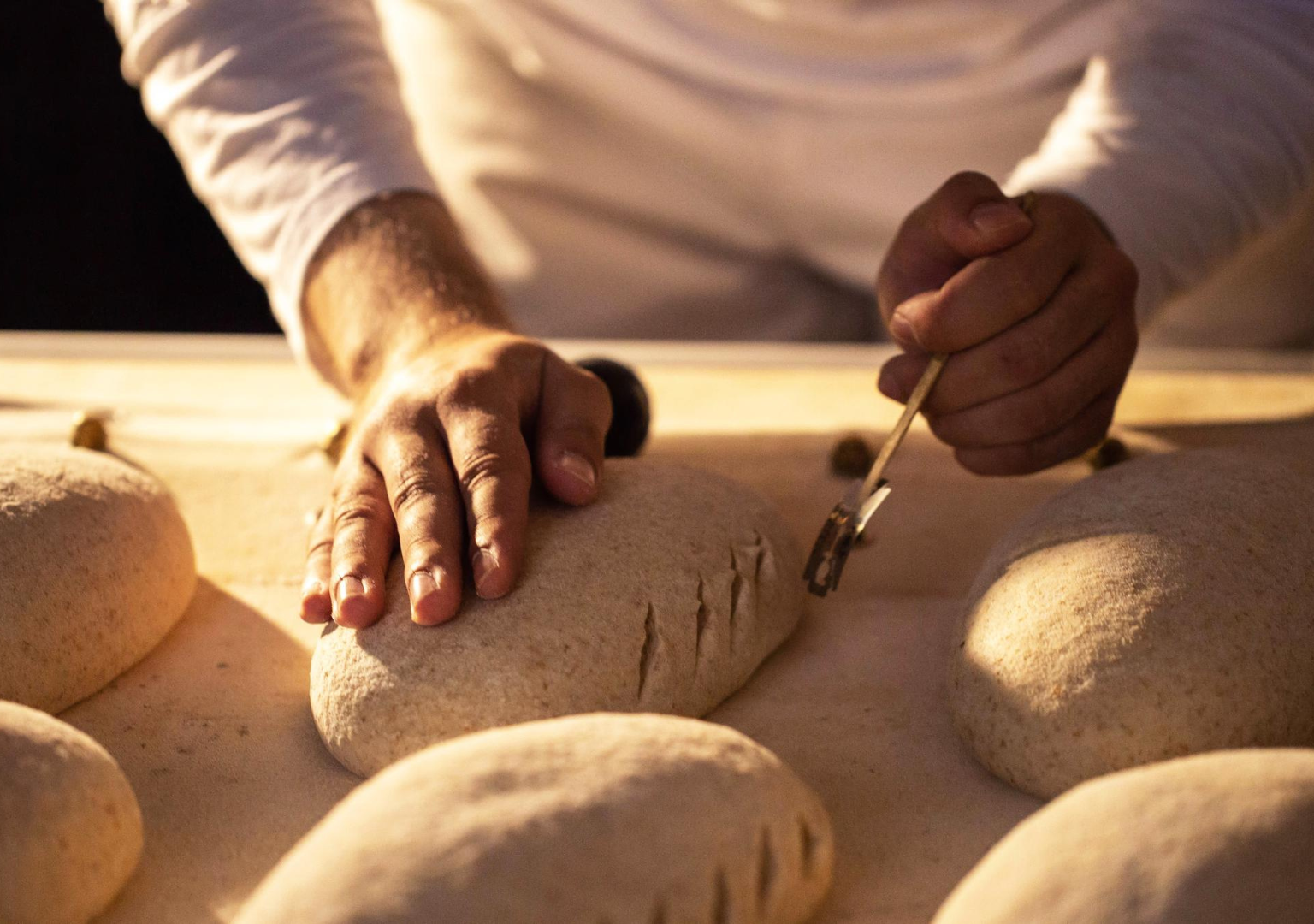
Artisan bread is more than a recipe — it is craftsmanship. The difference between average bread and truly exceptional artisan bread lies in subtle refinements: fermentation control, hydration balance, shaping precision, and flavor development.
If you already know the basics of baking and want to elevate your artisan bread to a professional level, this guide will help you refine your technique and achieve more consistent, high-quality results.
Start With Strong Fundamentals
Before improving a recipe, make sure your foundation is solid.
Ask yourself:
- Are you measuring ingredients by weight?
- Do you understand hydration percentages?
- Can you recognize proper gluten development?
- Are you confident in fermentation timing?
Improvement starts with consistency. If your base recipe produces inconsistent results, refine technique before changing ingredients.
Mastery is built on repetition.
Adjust Hydration Carefully
Hydration — the percentage of water relative to flour — has a major impact on texture.
Higher hydration:
- Creates a more open crumb
- Produces lighter structure
- Enhances crust crispness
- Requires stronger handling skill
Lower hydration:
- Produces tighter crumb
- Is easier to shape
- Is more predictable
If your bread feels dense, try increasing hydration slightly (2–5% at a time).
Always adjust gradually and record results.
Improve Fermentation Timing
Longer fermentation often equals better flavor.
Consider:
- Reducing yeast quantity
- Extending bulk fermentation
- Using cold proofing overnight
Slow fermentation allows:
- Deeper flavor development
- Better gluten strength
- Improved crust color
Flavor complexity is one of the defining traits of artisan bread.
Patience transforms quality.
Strengthen Gluten Through Technique
Better gluten development leads to improved structure.
You can strengthen dough by:
- Performing stretch-and-fold during bulk fermentation
- Allowing proper rest periods
- Avoiding overmixing
Instead of aggressive kneading, controlled folds often create better crumb structure.
Well-developed gluten traps gas effectively and supports oven spring.
Master the Art of Shaping
Even a well-fermented dough can fail if shaped poorly.
Proper shaping:
- Builds surface tension
- Supports vertical rise
- Creates balanced crumb structure
Practice:
- Pre-shaping
- Bench rest
- Final shaping with tight surface control
Loose shaping leads to flat loaves.
Precision in shaping dramatically improves results.
Use Cold Fermentation Strategically
Refrigerated proofing enhances artisan bread quality.
Benefits include:
- Increased flavor complexity
- Better crust caramelization
- Improved scoring definition
- More flexible baking schedule
Try cold proofing your shaped dough for 8–24 hours.
Compare flavor and structure with room-temperature fermentation.
The difference is often significant.
Improve Scoring Technique
Scoring controls how bread expands in the oven.
Good scoring:
- Prevents random cracking
- Enhances visual appeal
- Directs oven spring
Use a sharp blade and cut confidently at a slight angle.
Shallow, decisive cuts work better than hesitant ones.
Practice improves precision.
Control Oven Environment
Oven conditions influence crust quality and oven spring.
For artisan bread, focus on:
- Full preheating (at least 30 minutes)
- Using a baking stone or steel
- Adding steam during the first 10–15 minutes
Steam keeps the crust flexible during early baking, allowing maximum expansion.
Without steam, crust forms too quickly and restricts rise.
Evaluate Crumb Structure Professionally
Slice your bread and analyze the interior.
Look for:
- Even air distribution
- No large empty tunnels
- Balanced openness
- Moist but not gummy texture
Dense crumb may indicate:
- Underproofing
- Low hydration
- Weak gluten development
Large irregular holes with dense sections may suggest uneven fermentation.
Careful analysis guides improvement.
Experiment With Flour Blends
Artisan bread quality can improve with flour variety.
Try blending:
- Bread flour with whole wheat
- Small percentages of rye
- Stone-ground flour
- Ancient grains
Each flour type adds:
- Flavor complexity
- Nutritional value
- Unique crumb characteristics
Adjust hydration slightly when incorporating whole grains.
Focus on Consistency Over Creativity
Improvement comes from consistency.
Bake the same recipe multiple times before modifying.
Professional bakers aim for repeatable results.
Once consistency is achieved, controlled experimentation becomes more meaningful.
Reduce Yeast for Better Flavor
Many beginner recipes use excessive yeast for speed.
Try reducing yeast slightly and extending fermentation time.
Slower fermentation enhances:
- Organic acid development
- Aroma complexity
- Balanced flavor
Time is a powerful ingredient in artisan baking.
Improve Dough Temperature Awareness
Dough temperature influences fermentation speed.
Ideal final dough temperature typically ranges between:
24–26°C (75–79°F)
If your dough is too warm:
- Fermentation accelerates
- Flavor becomes less complex
If too cold:
- Rise slows excessively
Use a thermometer for better control.
Temperature consistency improves reliability.
Learn From Each Bake
After every bake, reflect on:
- What worked well
- What could improve
- Whether timing was accurate
- How crust and crumb performed
Keep detailed notes.
Professional growth depends on honest evaluation.
Avoid Common Artisan Bread Mistakes
When refining recipes, avoid:
- Increasing hydration too drastically
- Ignoring fermentation signs
- Skipping preheat time
- Cutting bread too early
- Making multiple changes at once
Change one variable at a time.
This isolates cause and effect.
Developing Your Signature Style
As your skill improves, you’ll begin developing personal preferences.
You might prefer:
- Extra-crispy crust
- More open crumb
- Slightly tangy flavor
- Heavier whole-grain profile
Artisan baking allows individuality once technical mastery is achieved.
Your style emerges naturally through experimentation and refinement.
Turning Good Bread Into Exceptional Bread
Exceptional artisan bread results from:
- Controlled fermentation
- Balanced hydration
- Strong shaping technique
- Proper scoring
- Steam management
- Consistent temperature control
These elements work together.
No single adjustment transforms quality — refinement across all areas does.
Final Thoughts: Precision and Patience Create Excellence
Improving artisan bread recipes is not about dramatic changes.
It’s about subtle refinements.
Small hydration adjustments.
Longer fermentation.
Better shaping control.
More disciplined oven management.
These details separate ordinary bread from extraordinary bread.
Keep practicing.
Keep analyzing.
Keep refining.
With every loaf, your understanding deepens.
And over time, your artisan bread will reflect not just a recipe — but true craftsmanship.